Colonoscopy is the single most effective screening test for bowel cancer; upper-GI endoscopy (OGD / gastroscopy) is its counterpart for the oesophagus, stomach and duodenum. Both are performed under sedation, day-case, in a half-day appointment — and often combined where indicated.
A colonoscopy uses a slim, flexible camera — about the thickness of a finger — to examine the entire large bowel, from the rectum to the join with the small intestine. The camera carries instruments that allow the operator not only to look, but to act: a suspicious polyp seen during the procedure can usually be removed there and then.
This combination of diagnosis and treatment in one sitting is what makes colonoscopy unusual among medical tests. The procedure is performed under conscious sedation by an anaesthetist; you remain breathing on your own, but you sleep through the examination and remember nothing of it. Most patients are surprised by how unremarkable the experience is.
An OGD (oesophagogastroduodenoscopy, sometimes called a gastroscopy) is the upper counterpart: a slim camera passed through the mouth to examine the oesophagus, stomach and the first part of the small bowel. The two procedures are often combined in a single appointment.
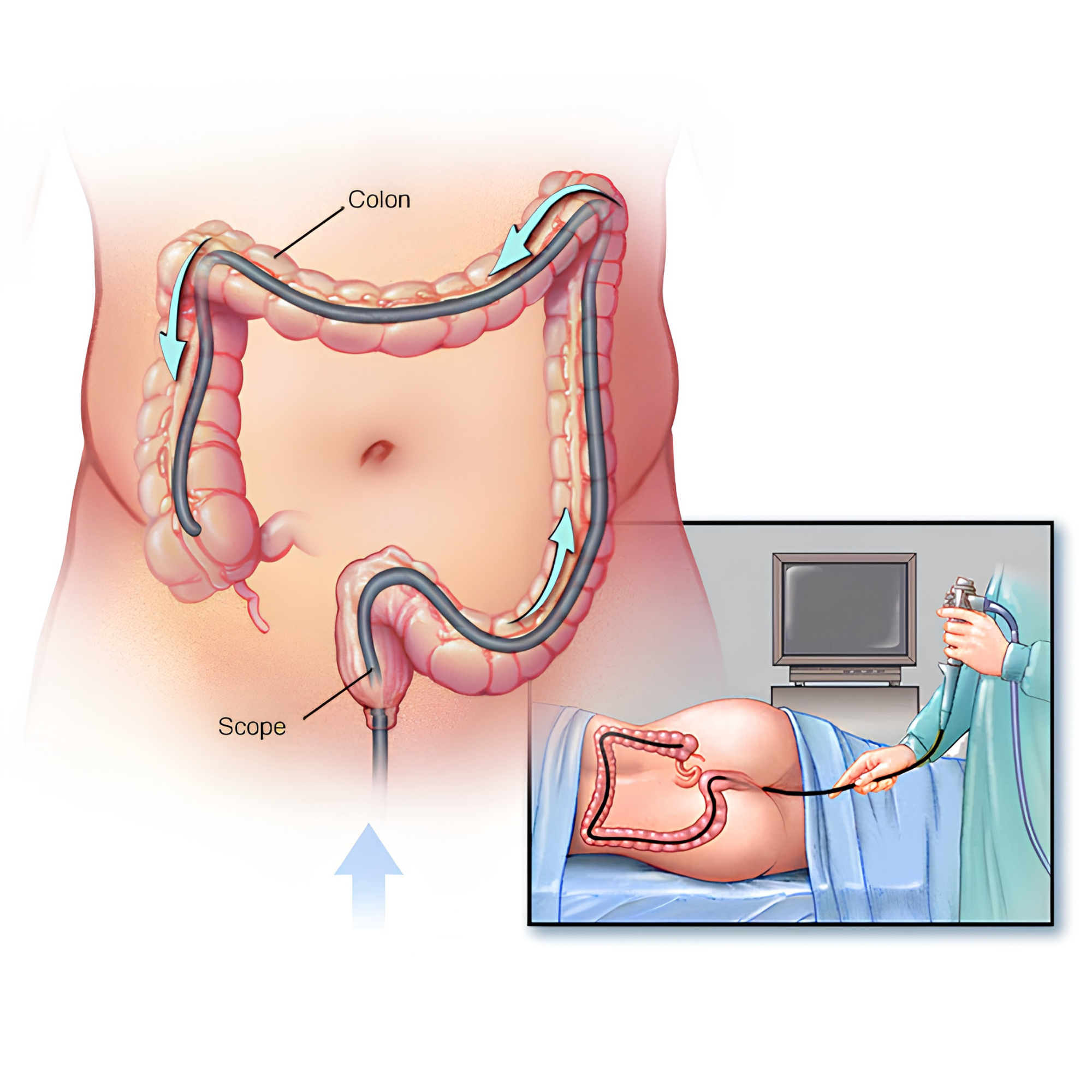
Colonoscopy — the lower-GI scope passes through the large bowel under sedation. The bowel is examined and any polyps removed in the same sitting.
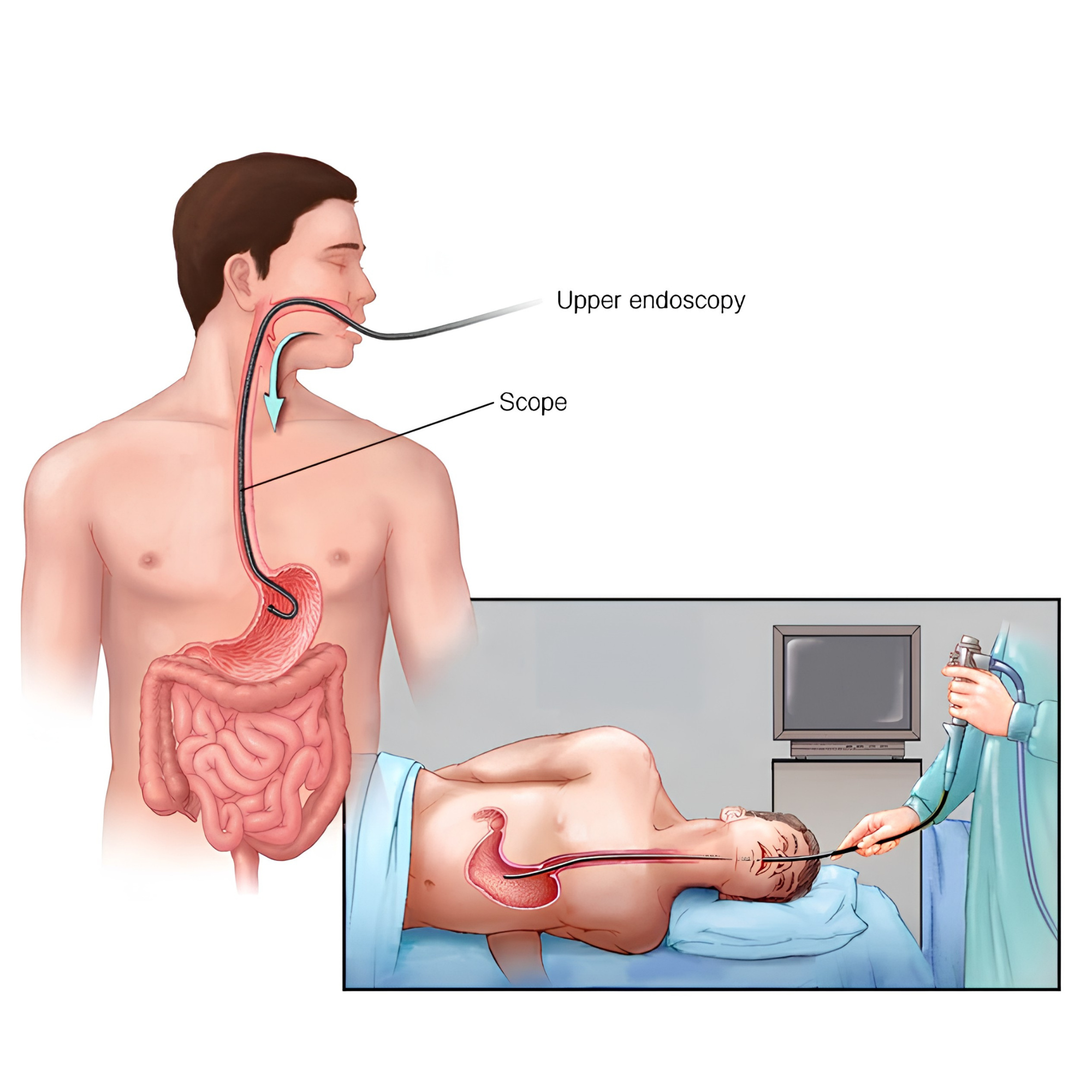
Upper-GI endoscopy (OGD / gastroscopy) — the upper counterpart. A slim scope is passed through the mouth to examine the oesophagus, stomach and duodenum, also under sedation.
Most colonoscopies are done for one of two reasons. The first is to investigate a symptom that could be coming from the bowel. The second — increasingly — is to screen for early bowel cancer in people without symptoms at all.
International guidelines now recommend a baseline screening colonoscopy from age 45 to 50 for the average adult, repeated every five to ten years depending on what is found. The reason is simple: colorectal cancer almost always develops from polyps that grow silently over many years before they ever produce symptoms. Removing those polyps prevents the cancer that would have followed.
Earlier screening — from age 40 or earlier — is recommended for patients with a family history of bowel cancer or polyposis, a personal history of inflammatory bowel disease, or a known genetic predisposition.
A colonoscopy is also the right investigation for symptoms that need a definitive answer. These include:
Only a small minority of eligible Malaysians attend routine bowel cancer screening. As a direct consequence, most colorectal cancers in Malaysia are still found later than they need to be — when treatment is harder and outcomes are worse. The single greatest change you can make for your own bowel health is to have a colonoscopy at the right age.
A prescribed laxative the afternoon and evening before. A clear-fluid diet from the prior evening. No solid food in the six hours leading up to the procedure.
Performed under sedation administered by an anaesthetist. Takes 20–30 minutes. Any polyps seen are removed in the same sitting and sent for histology.
Rest in the day-case recovery area for one to two hours while the sedation wears off. A light meal afterwards. Same-day discharge home with a responsible adult.
Findings of the examination are discussed with you on the day. Biopsy and polyp results are reviewed in a follow-up consultation within one week.
No. The procedure is performed under conscious sedation administered by an anaesthetist. You sleep through the examination and remember nothing of it. Some patients feel mild abdominal bloating in the hour after the procedure as the air settles, but this passes quickly.
Plan for a half-day at the hospital. The procedure itself takes 20–30 minutes. The longer time accounts for admission, anaesthetic preparation, the procedure, recovery from sedation, and a discussion of findings before discharge.
No. The sedation lasts long enough to impair your judgement and reaction time for the rest of the day. You will need a responsible adult to drive you home and ideally stay with you that evening. You should not drive, operate machinery or sign important documents for 24 hours.
It depends entirely on what is found. A normal screening colonoscopy in an average-risk adult is usually repeated every ten years. If small polyps are found and removed, the interval shortens to five years. Where there is a higher-risk finding — multiple polyps, advanced polyps, inflammatory bowel disease — surveillance may be more frequent. The plan is individualised at the time.
It is the least popular part of the process. You will need to remain near a toilet for several hours the evening before. Newer split-dose preparations are far better tolerated than older formulations, and detailed written instructions are provided in advance.
Colonoscopy is one of the safest procedures in medicine, but no investigation is risk-free. Serious complications — bleeding from polyp removal, perforation of the bowel — are rare (under one in 1,000 for diagnostic colonoscopy). These risks, where relevant to your case, are discussed in detail during the pre-procedure consultation.
Yes, and this is common where both ends of the digestive tract need to be assessed. The two procedures share the same sedation and recovery period, saving you time and an additional day of preparation.
The single most useful preventive step you can take for bowel health. Performed under sedation, day-case, at KPJ Kajang Specialist Hospital.